Abducted by Circumstance
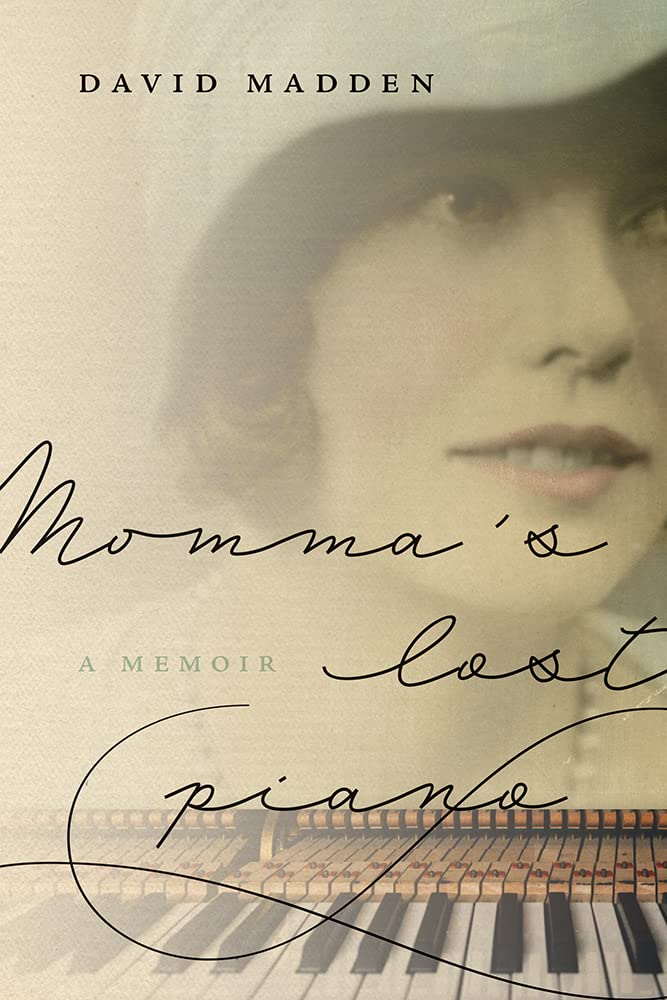
An ordinary, middle-aged woman in an ordinary, middle-aged life, Carol Seaborg lives in the Thousand Islands area along the U.S. and Canadian border. One night, while standing at a lighthouse, Carol chances to spot a woman named Glenda, not knowing she is the last person to see Glenda before she disappears.
The latest novel from acclaimed author David Madden, Abducted by Circumstance is about Carol’s unraveling—her tensions, her fears. Carol is in her second marriage, but her husband is crude at worst, remote at best. Then there’s the rest of her family: an adolescent son who is somewhat estranged, a bright five-year-old daughter, a father trapped by his own intellectual obsessions, and a mother who committed suicide.
As the local law enforcement and media suspect that Glenda has been murdered, Carol begins to project her own imagination into Glenda’s experience. Besides the imperfections of the damaged family relationships in her life, Carol is also struggling with personal problems, not the least of which is her own battle with breast cancer. The events involving Glenda’s disappearance take place just days before Carol’s second surgery for the disease.
Carol begins to have “conversations” with Glenda, and her own search for the missing woman becomes a mission of self-discovery. Part detective mystery, part soul journey—and thoroughly absorbing from start to finish—Abducted by Circumstance explores its central character’s troubled psyche with the rare precision and insight that have long distinguished David Madden’s fiction. [jacket copy]
Now available at Amazon.com.
If you wish to have a personally inscribed copy contact David Madden.
Listen to David Madden read fromAbducted by Circumstance.
Audio clip: Adobe Flash Player (version 9 or above) is required to play this audio clip. Download the latest version here. You also need to have JavaScript enabled in your browser.
Download chapter one of Abducted by Circumstance by David Madden

Congratulations and good luck with your new book! I took some photography classes under Blake. I had no idea his father was an author. This sounds like a winner.
THANKS, GARY. I HOPE YOUR PROPHECY COMES TRUE FAST.
DAVID, I’M GOING TO GREENVILLE, SC NEXT WEDNESDAY TO VISIT MY SON AND HIS FAMILY. I WOULD LIKE TO COME HAVE LUNCH WITH YOU ON THURSDAY. PLEASE REPLY WITH YOUR EMAIL ADDRESS AND PHONE NUMBER. I MISS YOU MY FRIEND, ESPECIALLY ON WEDNESDAYS BETWEEN THE HOUR OF 7AM AND 8AM. FRED
We are eager to see you Thursday, my dear old friend . David
Fascinating. Evokes vivid visuals as I quickly slip into Carol’s life.
You might also like THE SUICIDE’S WIFE, 1979, made into a movie with Angie Dickinson for CBS. It’s related to ABDUCTED BY CIRCUMSTANCE.
Jerry David, hope to see you at the Kentucky Book Fair this coming Saturday. Looking forward to visiting with you and purchasing a couple of your books I haven’t read, God willing. Steve
Well, it will be great to see you there, in Kentucky, again, old friend. Jerry David
Mr. Madden: I’m hoping to take your course in February. I printed the first chapter of this novel so I could read it several times. It is so gripping and horrible and interesting and so creative but I am a little confused, and I don’t THINK I’m stupid. I had trouble figuring out that Carol was thinking for the abducted woman. How does that work? She imagines what is going on even when the woman is long gone? And where is the punctuation? If these are dumb questions I’m sorry, I’m just trying to learn to write myself, and although this chapter is gripping I had trouble understanding it. Maybe I’m just not abstract enough.
I’m so curious as to why you needed Glenda. Why didn’t Carol become the abductee? Maybe I just need the rest of the book.
ABDUCTED BY CIRCUMSTANCE is unique in several ways, mainly in the process of the protagonist’s extremely imaginative compassion and in the techniques I needed to employ to render that process. The many readers, including many well-published novelists, who have given me their responses have said something like what you say: confusing at first, but gradually clearer and clearer and more and more powerful by virtue of going through those steps. Carol, we sense and later learn, is already confused about her life when she assumes the woman she admired at the lighthouse has been abducted by the man she saw earlier. As she imagines the progress of the abduction, she is much more confused, so that she and the reader are having the same experience, and I as author imagined stylistic techniques for rendering that process. Every word is attributed to Carol’s perceptions, her emotions, her imagination, her intellect, so that I as author cannot [and do not want to] explain anything to the reader. This novel, and the novel to which it is in some ways directly and indirectly related, THE SUICIDE’S WIFE, are not to be read as basic models for writing a novel. Each of my novels is very different from the others, but especially those two, and the one coming next: LONDON BRIDGE IN PLAGUE AND FIRE. I teach a more basic approach.
You ask why do I need Glenda, why not let Carol get abducted? The novel is not about someone getting abducted, it’s about one woman empathizing in the extreme with another woman, while dealing with ongoing everyday aspects of her life. I would never write a novel simply about an abduction, a thousand times already done, well and poorly, and passionately motivated some one will write another.
Read on, dear reader.
Thank you. That all makes perfect sense. As I read it the first time I began to suspect that Carol was emotionally off balance, and that is when it became so gripping. I have no idea how you get inside a person’s head like that.
What would you suggest for reading for me an aspiring novelist? I am currently reading Atlas Shrugs and also plan on re reading the Fountainhead.
Can you tell me more about your class. I am a senior citizen and I have written 3 suspense novels. I have never taken a class, and I was an art major, not english. http://www.floweredevents.com/Annie.html
Elizabeth
Ayn Rand is fine just for interesting reading, but you do well to read novels that are models of the art of fiction. In your own field: Georges Simenon [not the Maigret series, the psychologic novels], Margaret Millar, Ross Macdonald, Kenneth Fearing [also a poet]. For others, see my list in my book REVISING FICTION, out of print, but Amazon sells used copies cheap.
I teach the art of fiction through revision of drafts of stories. Hard work, in the workshop; no touchy-feelie stuff. Still it is both fun and exhilarating.
Your response this morning to my question (on the Jim Engster Show) was disappointing. You offered up pretty platitudes: read extensively, work at your craft diligently, produce good work . . .
And then what? Submit your unsolicited mss to the overflowing slush piles?
The truthful answer to my question is this: Young writer, get thee to a prestigious MFA program and once there network, network, network. Make the influential contacts that will land your mss on an editor’s desk, where it will be read with a positive attitude.
Everybody involved in the world of literary fiction (as it operates today) knows this! Even the comments you get from others are attempts to ingratiate.
The refusal to speak the truth calls to mind a certain Hans Christian Andersen fairy tale.
I think Revising Fiction is excellent, and I appreciate the effort you’ve made to get neglected books rediscovered. I’ve used your lists in Rediscoveries I and II and have often been rewarded. But there are more than published and now-forgotten novels that need a fair reading.
I could barely hear your question and I had seconds to answer what really requires a few hours of class time to be of any value. I misunderstood your question, thinking you were asking what a writer should do to become a better writer, and my short, air-time answer stands, augmented by REVISING FICTION, which I am glad to know has been of value to you, along with REDISCOVERIES. Over the years, many people have written to me with similar responses, a few of which are on this website or on the internet if you google the title.
I gather from your comments that your question was, What should a writer do to get published? I assume the writer you have in mind is one who has already learned the art of fiction and applied it in a novel close to being publishable. In that case, everything you say about MFA programs–networking, etc.– is true to my experience and to what I have told hundreds of writers and will tell the next one who writes or calls.
You leave out, however, two other advantages: the writer can write for three or more years supported by a grant, meagre though it often is, and , above all, a writer can prepare to teach writing [but only after publishing a novel that proves mastery of the art of fiction]. The writer has, I assumed, carefully examined all the options and concluded that that is the best way to spend time (which will include teaching freshman English, among other things).
More writers than we know still read, learn, and write in solitude, send their work to an agent or an editor [even though both are difficult to reach, but not impossible] and still get their work published.
A word about my own experience in writing programs. I was in the master of creative arts program at San Francisco State in the late 1950′s during the beat era and at Yale Drama School, 1959-60, but, although I know very well that networking works and is valuable, I have very seldom asked or expected anyone to intervene for me with a publisher, preferring to let my work succeed or fail on its own merits. That’s my personal feeling, not my recommendation for everyone, and that, I swear on the grave of Hans Christian Andersen, is the truth– as I see it.
A good, fair-minded answer.
Some people’s lives are such that an academic career is not possible. Or, after years of being a reader, they begin to write when age and obligations limit their options.
They write, but the product of years of work meets the vast silence of indifference. Long ago you declined to look at a novel I had written — you informed me that you didn’t take on “unsolicitated appeals.” I was disappointed but not resentful; I already knew the way things worked, and at least you responded to my request. You listed the many obligations that you had, and that those obligations result in your being selective in what you read. But who gets selected?
I can observe, think, and reach conclusions: I see others make contacts, mostly through MFA programs, and find success with inferior work. This can’t be a healthy situation for literary fiction.
An editor of a prestigious magazine (who also declined to look at my work) wrote me: “You’re right — it’s all MFA all the time. Don’t quite know what to do about it.” Nor do I.
On a personal level, I’ve found that resignation is the best route.
Resignation was not an option for Thelma Toole. She understood what she needed to do. I describe the convoluted path to publication that CONFEDERACY OF DUNCES took in “Dear Dr. Percy, Please Help Me!” If someone clicks on my name, they’ll find the piece.
REDISCOVERIES is a worthy enterprise. I have a special place in my heart for the neglected novel. I wonder why?
Anyway, thanks for your answer. You could have bitten my head off, but instead you were considerate.
David, I read, liked a bunch, and understood Abducted By Circumstance. How’s about sending an old friend a photo or two of us taken at the Frankfort Book Fair? Be well, God bless, and keep writing… Steve
Okay, soon as I can dig it up. Too many deadlines I am meeting right now. David
David, I was a student at Appalachian State in 1961 when you came out with The Beautiful Greed. and I have an early edition of that book. I was introduced to you by a young man named Ken Burke. I’m glad to see you’re still at it. I was playing bit parts in Horn in the West in those days. as well as going to school. Good luck and keep on singing
Don, Remind me more about yourself and ways I knew you. I am very happy to hear from you, especially because in late August I return to Appalachian State as distinguished writer in residence for 8 weeks, and many fine memories of that year I taught there and was in HORN IN THE WEST and was announcer at the local station come vividly to mind. I worked on other novels and books there on Grand Avenue and in two different farm houses, returning two more summers after Yale Drama School: CASSANDRA SINGIING, WRIGHT MORRIS, JAMES M. CAIN, PLEASURE DOME, and other plays and stories. Ken Burke was one of my first students and I crave knowing where he is these days. Every good wish, David
Unfortunately, I cannot think of much more to connect us, except that I played the part of Gov. Tryon and one of the settlers when David French was director of Horn in the West. Ken told me about you (with great enthusiasm) and then we went out to the farm house to visit you briefly. (I have signed copy number 7 of Greed.) Ken left ASU and I lost touch; I believe he was from Kannapolis.
My brief story is that after graduation (BS, English) I taught English and Theater Arts at Ashley High in Gastonia 1961-5, then went into the insurance business for almost 35 years, retired in 1999, received my MA in Liberal Studies at UNC-W in 2001, and am now 21 hours into the MA in English program at UNC-W. I have done some informal editing ( For example, my friend Dr. James C. Burke—no relation to Ken, as far as I know— is shortly coming out with what I believe will be the definitive work on the North Carolina Railroad, and will next work on the NC Railroad and the Civil War Years.).
It seems that those early years under the influence of Eggers, Williams, et al, won’t go away, and I am continuing my studies, now strictly as a pastime.
I was among the former students who went on pilgrimage to Boone June 10 for our 50th reunion. We had a great time. Really, I wish I were doing my MA in English there, but since I live in Wilmington, UNC-W is the practical reality.
You see, I have followed your career electronically with admiration, and I continue to do so. I wish I could see you while you’re in Boone, but from Wilmington it’s a fair drive but not quite long enough to warrant a good plane trip. David, thanks very much for being in touch, and have a happy summer in Boone!
Best,
Don
I appreciate all that you tell me here, Don. My son went to UNC-W a few years ago. He’s a fine photographer. Is Black Mountain closer than Boone? In any case, come see me here, and let’s talk about the good old times. Did you see the production of my play CASSANDRA SINGING uptown in an old basement? Romulus Linney liked to say it was wonderful–and he was never wrong. I miss him. David
I’d love to see you while you’re in Boone, David. Grad school keeps me busy, so I don’t know whether I will get up there. If so, I’ll send you a message so we can work out when is good for both. I did not see CASSANDRA but I well remember it! I’m glad to know about your son; Boone is a special place. Black Mountain and Boone require approximately the same time to travel from Wilmington. Don
Dear Mr. Madden,
You stopped in my office today and asked about a piece of property on Shulls Mill. I just wanted to say
what a pleasure it was to meet you and wish you luck on your search for the history of the property.
If you are ever this way again I hope you stop in and say hello. Coffee pot is always on.
Regards,
Sherri Giles
105 Realty Place
Beautiful Foscoe – outside Boone